

Proving Rehabilitation Is Possible with The Way to Happiness

George Aguko once knew only one life—a life of crime that eventually led him to prison. Inside prison, he confronted the harsh realities of incarceration: inadequate services, strained relationships between officers and prisoners and deaths within prison wards. Those experiences forced him to face a life-changing truth: crime is not a talent, nor is it destiny.
Determined to change his path, he began mentoring his fellow inmates under the motto “Kwetu Crime Si Poa” (Swahili for “To Us Crime Isn’t Cool”), getting them to develop other skills than crime.
After his release, Aguko co-founded RE4MIST Kwetu Crime Si Poa, built on the conviction that rehabilitation becomes possible when individuals regain values, self-respect and purpose.
He and project coordinator Dickson Onyango expanded the organization’s work across Kenya’s prison system and into high-risk communities, including urban slums. Their mission is clear: reduce crime by addressing its root causes—chief among them the absence of moral guidance and personal responsibility.
At the core of RE4MIST’s programs is The Way to Happiness (TWTH). A full 16 prisons across Kenya have benefited from TWTH educational materials. Rather than lecturing inmates, RE4MIST seminars invite reflection, helping participants recognize how their choices affect themselves and others and empowering them to choose a new path grounded in decency and self-respect.
The results have been both visible and measurable. Recidivism dropped by 51 percent. Prison officers report calmer interactions, improved cooperation and increased respect for rules and authority. Inmates once described as rude or rigid have had “tremendous positive change” and improved self-esteem and outlook on life.
At Kisii Women’s Prison, inmates incarcerated for illegally brewing alcohol studied Precept 9, “Don’t Do Anything Illegal,” and Precept 16, “Be Industrious.” Many then enrolled in vocational training such as beadwork and weaving. Upon release, several women started their own businesses.
At Homa Bay Main Prison, seminars on Precept 1, “Take Care of Yourself,” and Precept 12, “Safeguard and Improve Your Environment,” resulted in cleaner living spaces, planted trees and a beautified compound.
Time and again, prison officials request additional TWTH seminars, citing their effectiveness in reducing violence, restoring dignity and encouraging lasting behavioral change.
TAKING ACTION
WORK WITH THE WAY TO HAPPINESS
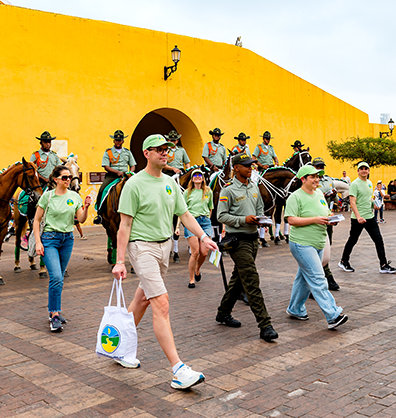
The Way to Happiness Foundation is joining forces with individuals and organizations to make a real difference in communities everywhere.
By using the 21 precepts of The Way to Happiness, anyone can bring practical guidance and ethical solutions to those around them. Organizations, schools, businesses and nonprofits are already seeing the positive impact of sharing these common-sense principles.
You can take part by introducing The Way to Happiness educational materials in your community. From booklets to educational kits, these resources make it simple to promote moral values and better living—without preaching.
Whether you work with youth, neighbors or colleagues, you can help spread positive values and inspire others to make better choices. Small or large, every action makes a difference.
Work with us and help create a stronger, more ethical world. Find out how.

RESTORE MUTUAL RESPECT
The Way to Happiness Foundation International works to reverse the moral decay of society by restoring trust and honesty through widespread distribution of the 21 precepts. Donations support the production and distribution of The Way to Happiness booklet.


