

Leading the Call for Reform in the Philippines
The Philippines ranks fourth in the world for its overcrowded jails. Nearly one in three released inmates soon returns, caught in a relentless cycle of reoffending that exposes a system without answers for reform.
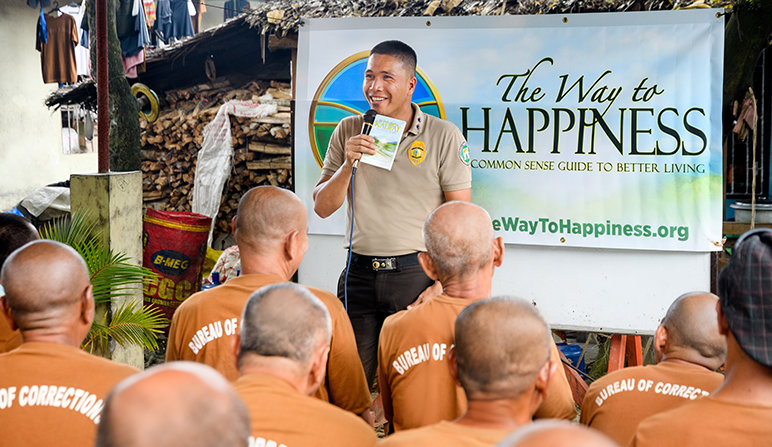
“The problem we have, number one, is recidivism,” says Ojie Solitario, Chief of the Moral and Spiritual Section at the Davao Prison and Penal Farm in the south of the country. “After they’ve served time, they’re released—only to end up back in prison again. If no one cares to stop it, our prisons will stay overcrowded.”
Looking for a program that could reach all inmates regardless of faith, Solitario came across The Way to Happiness, a nonreligious moral code. “I needed a program that isn’t religious, one that everyone can participate in,” he explains, noting the diversity of religions among the prisoners.
Using The Way to Happiness Educator’s Kit designed for correctional facilities, Solitario developed a reformation program built on 21 precepts for better living from The Way to Happiness. The Deputy Superintendent approved it, calling it “a booklet that caters universally to humanity.”
Solitario launched the program across the prison. In the Minimum Security Camp, inmates preparing for release studied “Be Worthy of Trust.” In the Medium Security Camp, discussions focused on resisting addiction and understanding the consequences of drug use. In the Maximum Security Camp, the precept “Respect the Religious Beliefs of Others” helped defuse interfaith tension. Even the most hardened criminals joined in, performing skits that demonstrated the precepts.
Solitario has now educated more than 3,800 inmates with The Way to Happiness. The impact is evident. Prisoners spoke of rediscovering self-respect—realizing they could feel good, do good and be good even behind bars. Others requested booklets to share with family during visits, spreading hope beyond the prison walls. Solitario’s belief that true change must start before crime occurs has motivated his actions. “We teach the youth not to commit crimes in the first place,” he says. “And for those already inside, we educate them so that when they return to society, they don’t offend again. By doing so, we help both those outside and those inside.”
As a result of applying The Way to Happiness, wardens reported a two-thirds reduction in inmate violence. Of the 358 graduates who completed the full program so far, over 99 percent have not committed any further infractions.
Such is the power of The Way to Happiness in action. Discover other inspiring stories of transforming lives.
TAKING ACTION
45 YEARS OF CHANGING LIVES
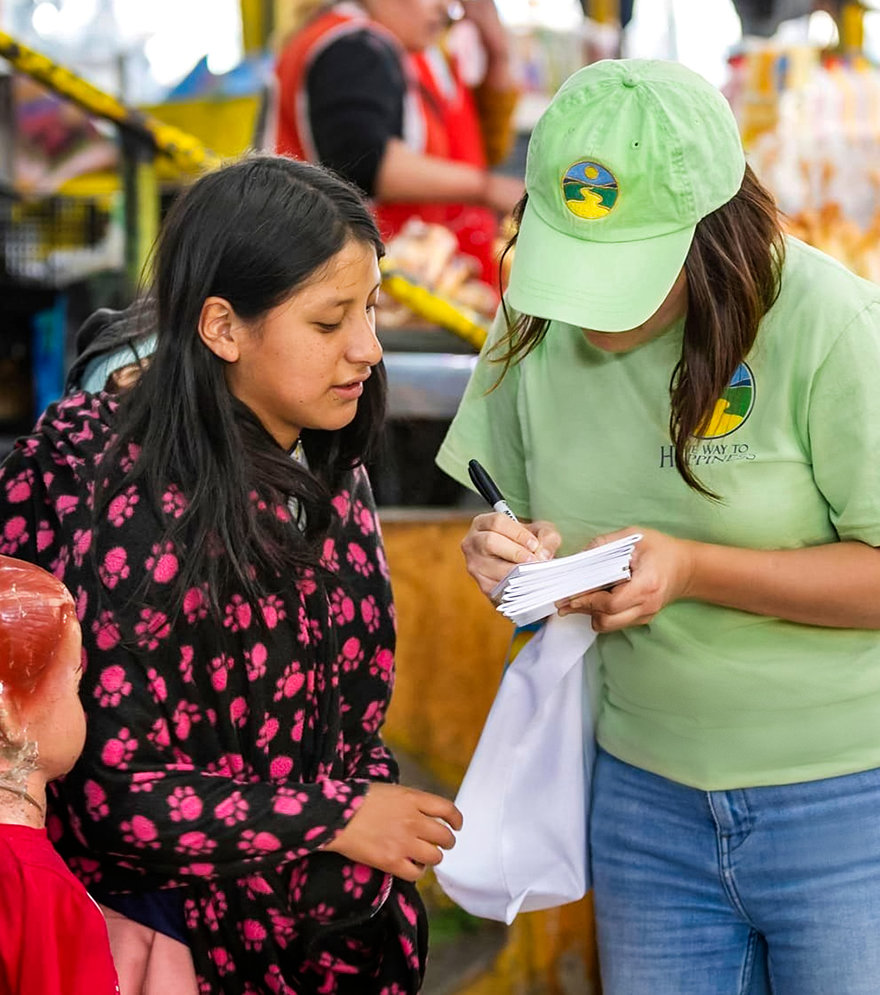
For 45 years, The Way to Happiness has inspired people worldwide to build a more honest and trusting world. Since 1981, over 140 million booklets in more than 100 languages have been shared hand to hand, restoring decency and compassion where needed.
Across continents, people use The Way to Happiness to uplift neighborhoods and bring calm where conflict exists. In Colombia, a former Minister of the Interior said, “This little book is a moral and ethical miracle…. It is not a religious or political message, but a universal one.”
His words reflect what millions have found: change begins when one person shares this common-sense moral code with another.
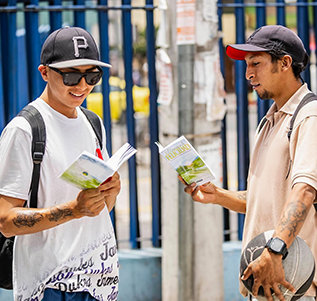
Celebrate the 45th anniversary by reading, living and sharing The Way to Happiness. Pocket-size booklets come in bundles of 12—ideal for friends, family and colleagues.
RESTORE MORAL VALUES
The Way to Happiness Foundation International works to reverse the moral decay of society by restoring trust and honesty through widespread distribution of the 21 precepts. Donations support the production and distribution of The Way to Happiness booklet.


